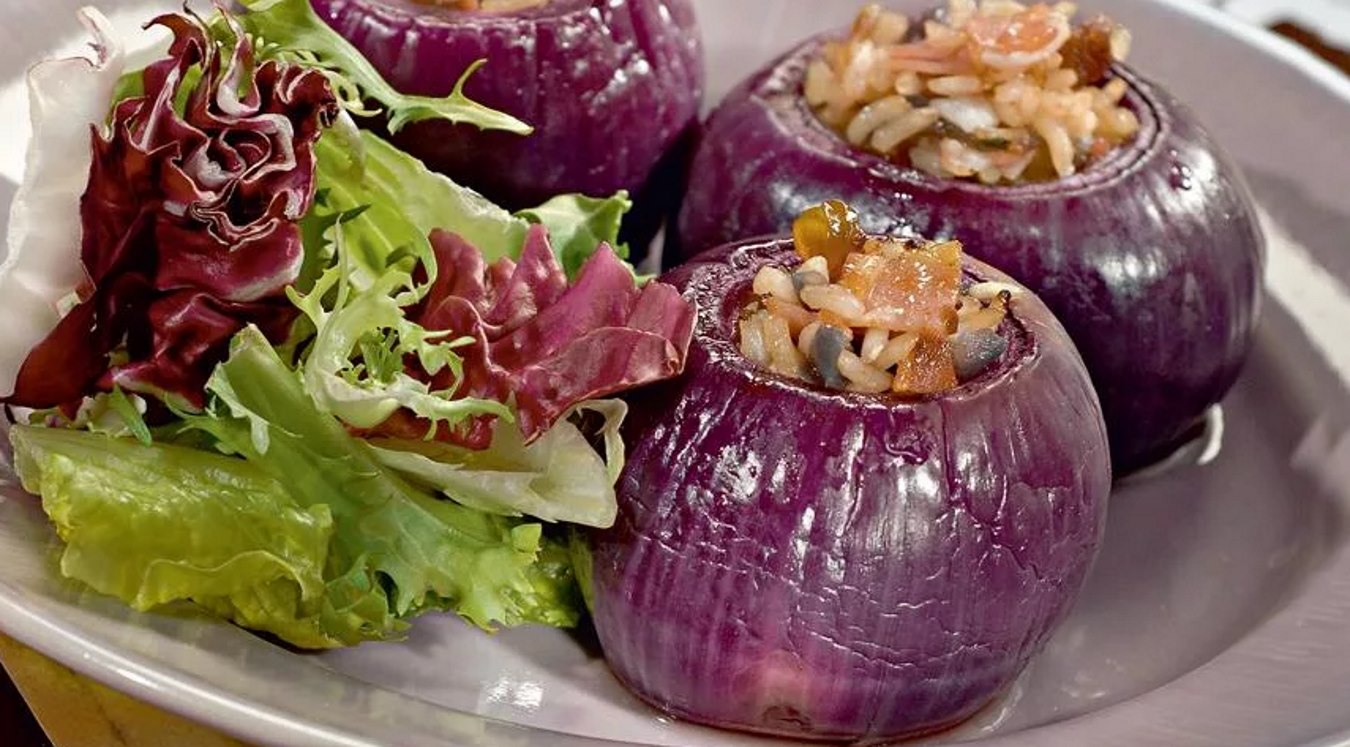
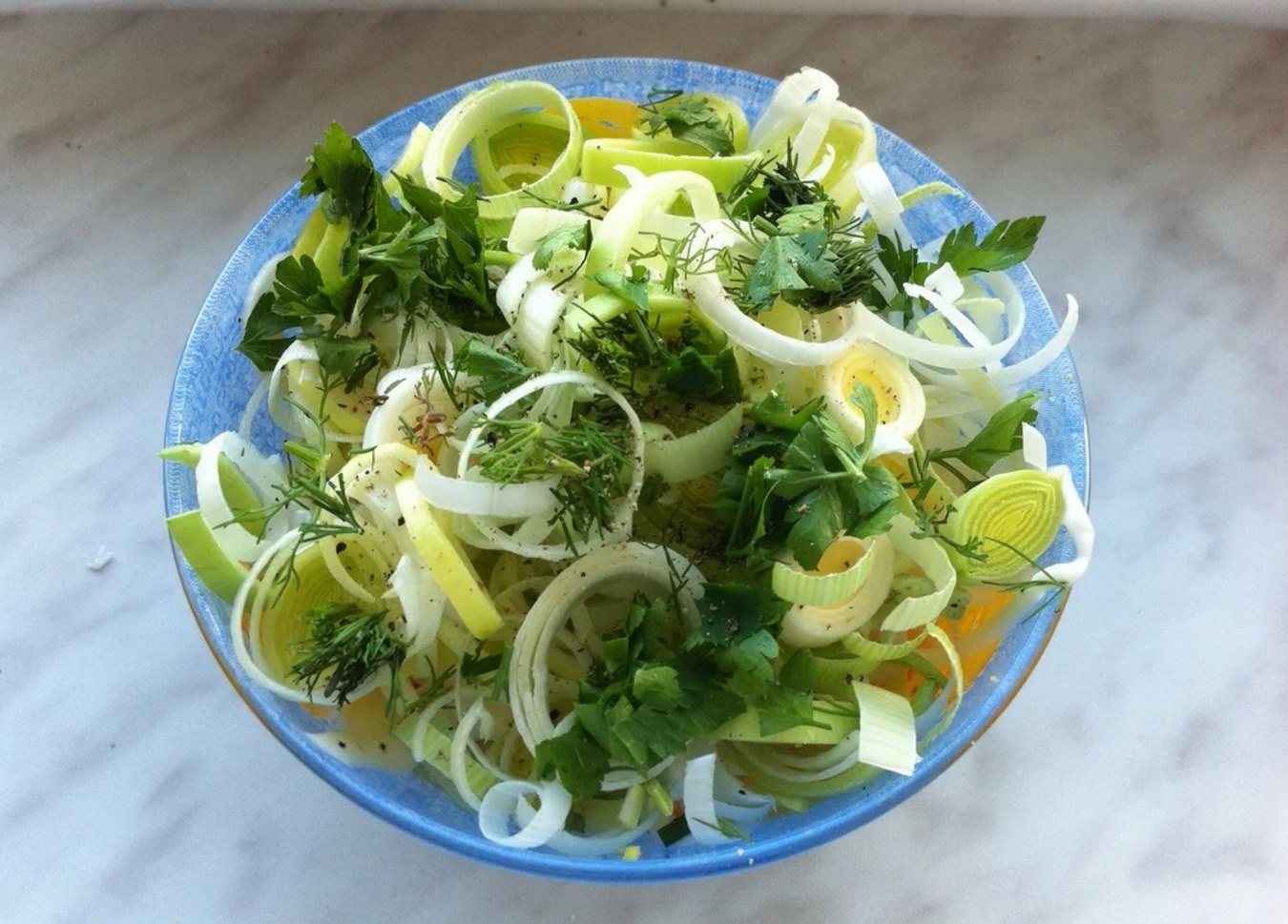
Onions in cooking are used in raw, boiled, fried, pickled and salted types. Although to preserve all the useful properties, minimal thermal exposure is recommended. Onions can be both a flavor seasoning for the main dish (and it is combined with meat, fish, rice, potatoes, flour products, cottage cheese, and other vegetables), and the basis of the recipe. Many national cuisines have their own “branded” culinary products, in which onions can be called a key ingredient: French onion soup, British onion pie, etc. There are some culinary tricks that will allow you to cook this product (or a dish based on it) as tasty as possible: If you add a little granulated sugar to the oil during frying, the onions will brown better. So that the chopped onion does not burn during sauteing, before sending it to the frying pan, you should roll the “straw” in flour. Then it will simply acquire a reddish hue. Onions can be added to minced meat not only to improve the taste, but also to extend the shelf life of the meat part. To get rid of onion bitterness in the manufacture of salads, raw onions are slightly scalded with boiling water, and hands and knife are smeared with wet salt.
When choosing onions, preference should be given to dense clean heads, without damage, holes and stains. The sweetness-bitterness of a vegetable depends not only on the variety, but also on the length of daylight in the place of cultivation (southern onions are considered sweeter), the mineral content of the soil, the softness of the climate, the abundance of precipitation, etc. For example, with a large amount of annual precipitation, sulfur is actively washed out of the soil, which creates prerequisites for growing a sweeter vegetable. However, in general, it is believed that white varieties have a stronger flavor and are better suited for filling pies, red and purple ones have a sweet taste and are well combined in salads and marinades, and the Spanish variety is softer and sweeter, as well as onions with yellow–brown husks are better suited for frying.
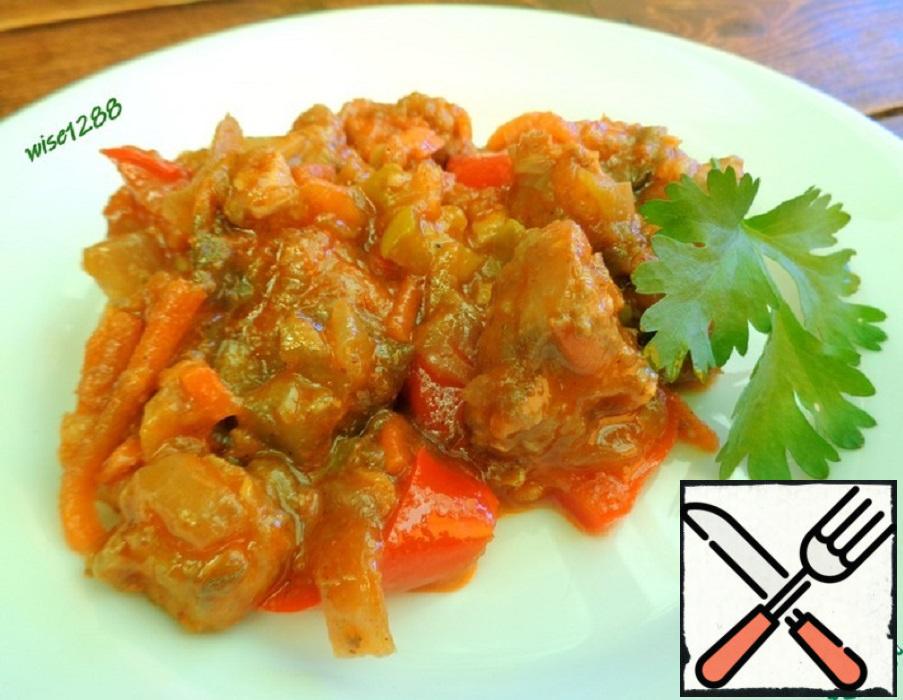
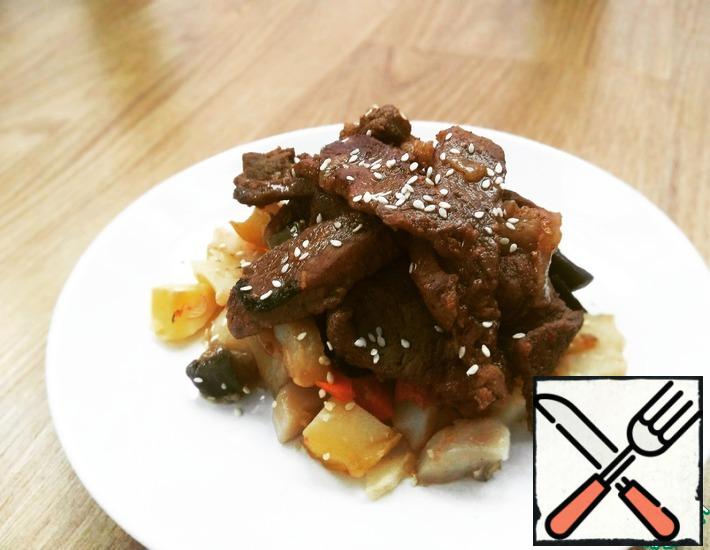
Stew with zucchini and eggplant is relevant at any time of the year – it is always nice to enjoy the taste and rich aroma of cooked vegetables. The dish turns out to be fragrant due to the abundance of herbs, garlic and pepper in the recipe. In addition, this dish is prepared on the basis of meat, which is perfectly combined with young vegetables and the dish turns out to be very satisfying.
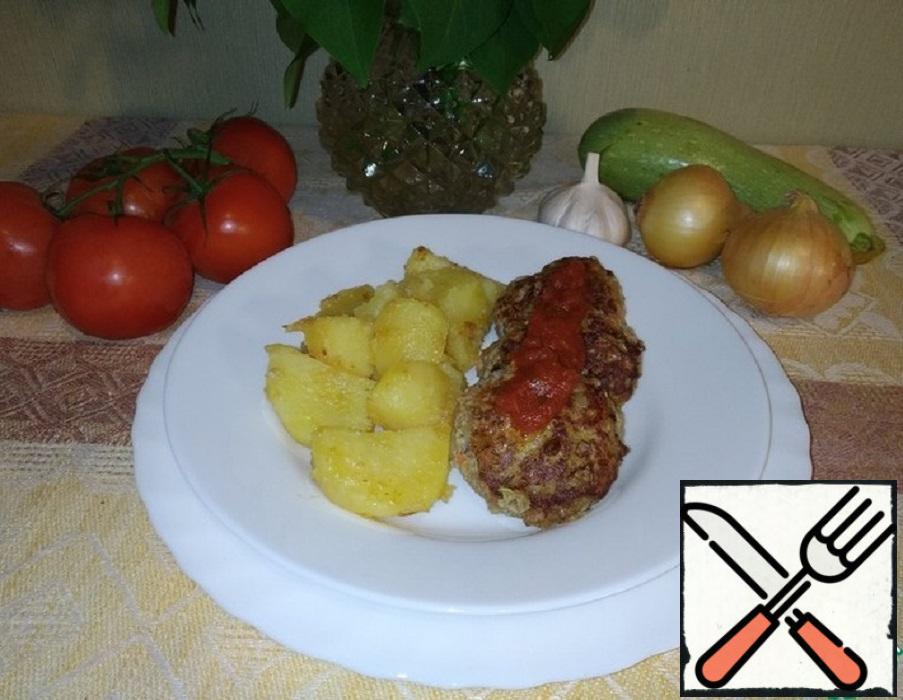
We all sometimes like to treat ourselves and our loved ones with delicious homemade cutlets. But the classic recipes for cooking them are usually very high in calories, with a high fat content to give them juiciness. Because of this, they take a very long time to digest, cause fatigue and heaviness in the stomach, and sometimes even heartburn. But to deny yourself a favorite treat is sometimes very difficult. Therefore, I suggest the option of cooking cutlets with a large amount of vegetables added to minced meat. This option will make them not only more useful, but also cost-effective.
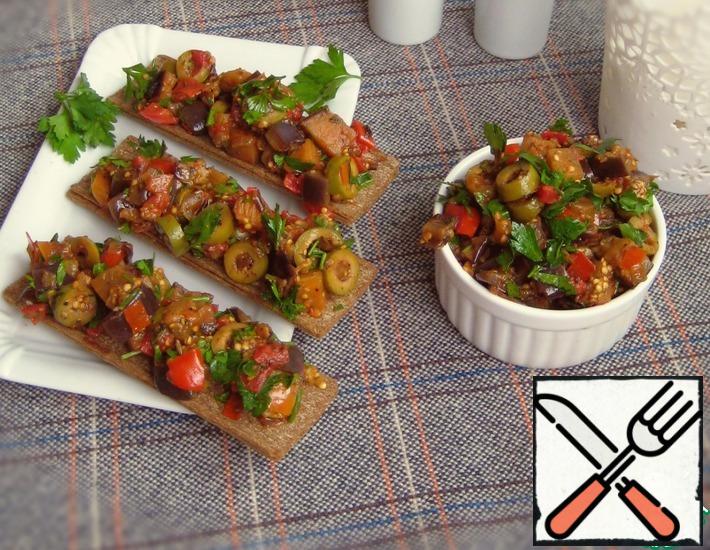
Vegetable appetizer with eggplant, tomatoes and green olives! Good for a snack with bread or dried slices of bread, and as a vegetable addition to the main dishes!
In different ways, I experimented with adding different products to the pate, because my husband categorically does not eat liver. I came across a jar of ricotta in the refrigerator and decided to take a chance, ” what if?”. I made pate and mixed it with ricotta. She spread it on bread and offered it to her lover to taste. The answer was unexpected: “can you do the same thing, but without bread?”. The pate is prepared traditionally, but the addition of ricotta makes it extremely tender and airy.
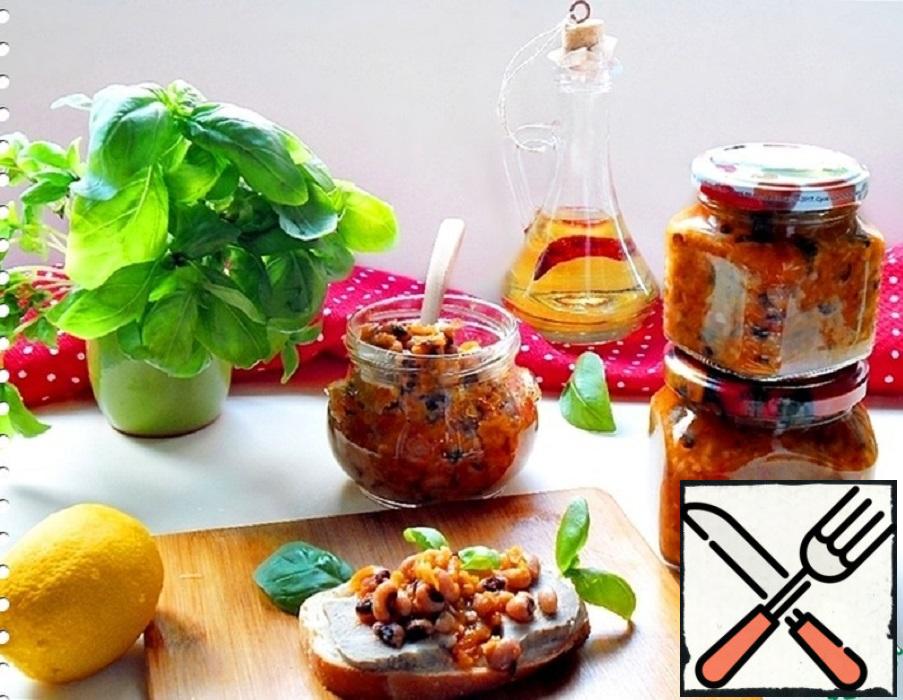
A light vegetable dish, I added Basil, lemon juice and some cloves. In hot form-garnish. Cold-appetizer. For sandwiches and soups. You can prepare for the winter. Light sourness from lemon, Basil and clove flavor give the dish a pleasant aftertaste.
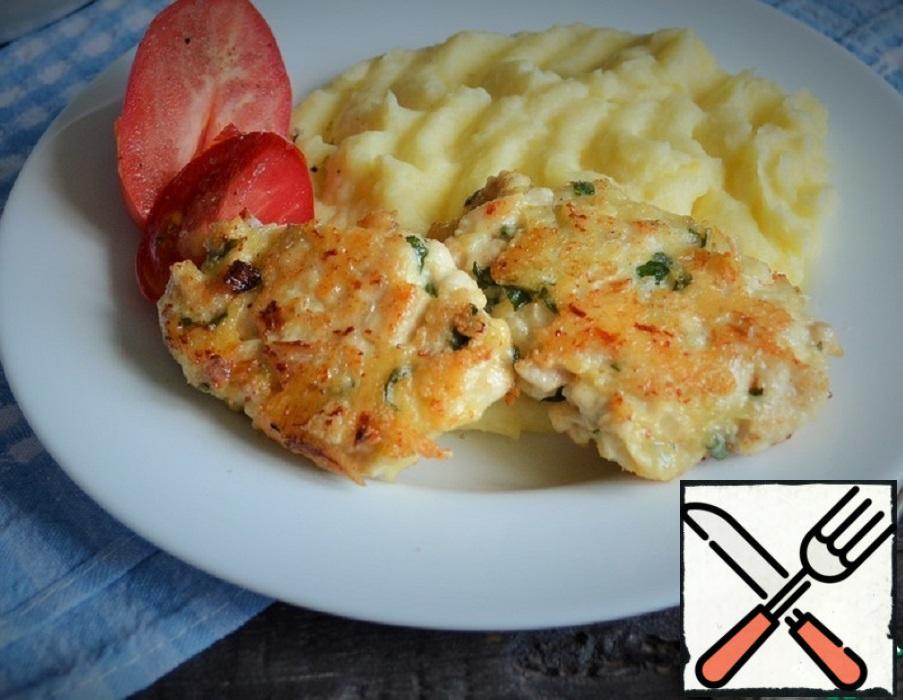
Fast and delicious, just 15 minutes and hot, delicious cutlets on the table. These are very fond of children, so we will please them, and we will enjoy it ourselves. Treat.
Fettuccine Alfredo (also known as pasta al burro or pasta Bianca) is an ancient and simple pasta recipe first mentioned in the 15th century. The second life was breathed into it, at the beginning of the last century, by the chef Alfredo Di Lelio. Later, the recipe was developed and modernized, especially outside of Italy. The original list of ingredients has been significantly expanded. Today I offer you just such a modernized version of cooking fettuccine Alfredo with shrimp.