Second courses are the basis of every family’s diet. There are hundreds and thousands of such home cooking options in every kitchen in the world. Meat, vegetable, cereal and mixed with herbs and sauces, cooked from a steamer, oven, slow cooker, and just from the stove.
Delicious recipes for second courses in a hurry or for a festive table are infinitely diverse. Simple recipes with photos will help even novice cooks in cooking.
The second course to the table is traditionally served after the soup – in other words, the main ones are the “second” dishes that are familiar to us, which are the central element of the meal. Most often, the main second course is prepared from meat, poultry, fish and seafood, to which cooked or raw vegetables, legumes, cereals, pasta and mushrooms are necessarily served as a side dish.
Fish or meat main dishes are the most satisfying, nutritious and large in volume. For every day, modern chefs, as a rule, serve simple main dishes that are easy to prepare. Cutlets, meatballs, schnitzels, sausages, cabbage rolls, fried fish or fish in batter, which do not require much time for heat treatment and serving. On the occasion of the solemn events, a festive main dish is being prepared, which should surprise the guests and become the culmination of the banquet. Here, each cook is already trying to show her culinary skills, choosing from the most delicious recipes of the main dishes what suits the tastes of the guests and the budget of the hosts.
Here you will find a rich selection of photo-recipes of main dishes – bean rolls with cheese, white fish meatballs, rabbit in orange marinade, pork stuffed with prunes, chicken with peaches and Scottish eggs. The main dishes prepared according to our recommendations will definitely become the star of the dinner party!
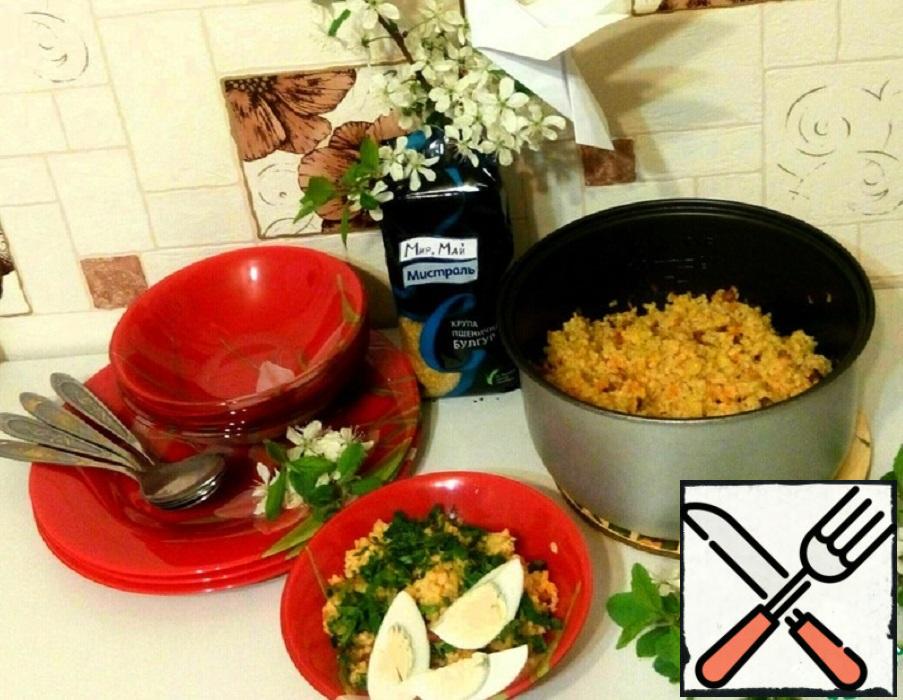
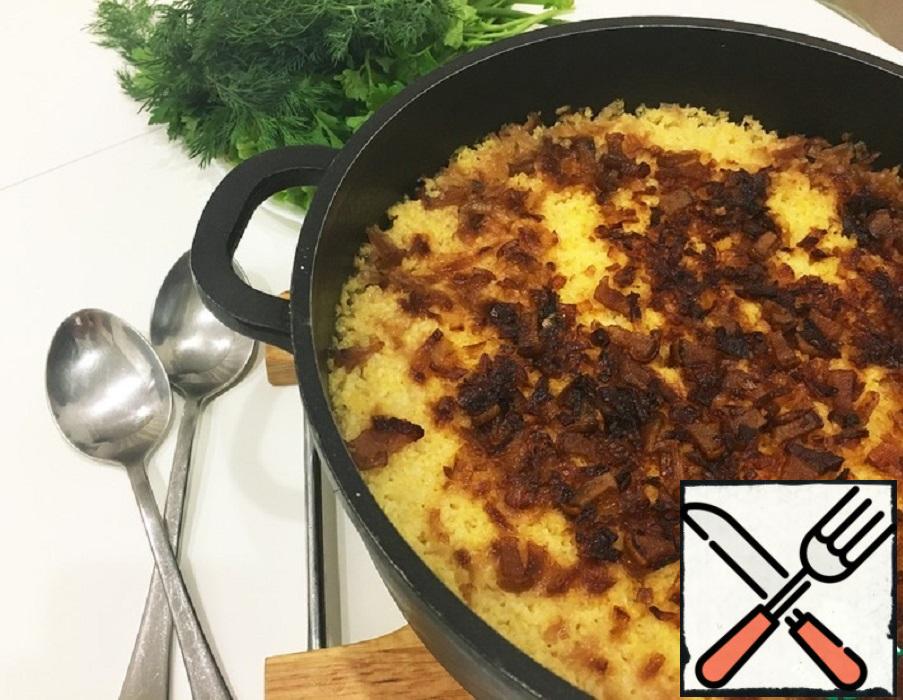
Kulesh is a dish that has become widespread among the Cossacks. It was prepared in the field, it replaced the first and second. The obligatory components of the classic kulesh are millet groats and lard. The rest is what it is. Too much time has passed, and kulesh has changed, falling in love with many people. Well, what kind of May holidays without kulesh and kebabs! Unfortunately, this year it will not be possible to get out into nature (my husband is working). So I decided to cook porridge at home in a slow cooker and experiment with the components. It turned out very tasty! If you also fail with nature or the weather, try my kulesh.
Why “a la”? Well, for the first, real porridge cooked on fire in a cauldron, for the second – without potatoes and bacon. The weather is lousy, and I miss nature, kebabs and… Kulesh. In general, this is the most budget and fastest option, my friends and I have been preparing it since our student days. Today I decided to cook it at home and in a regular saucepan.
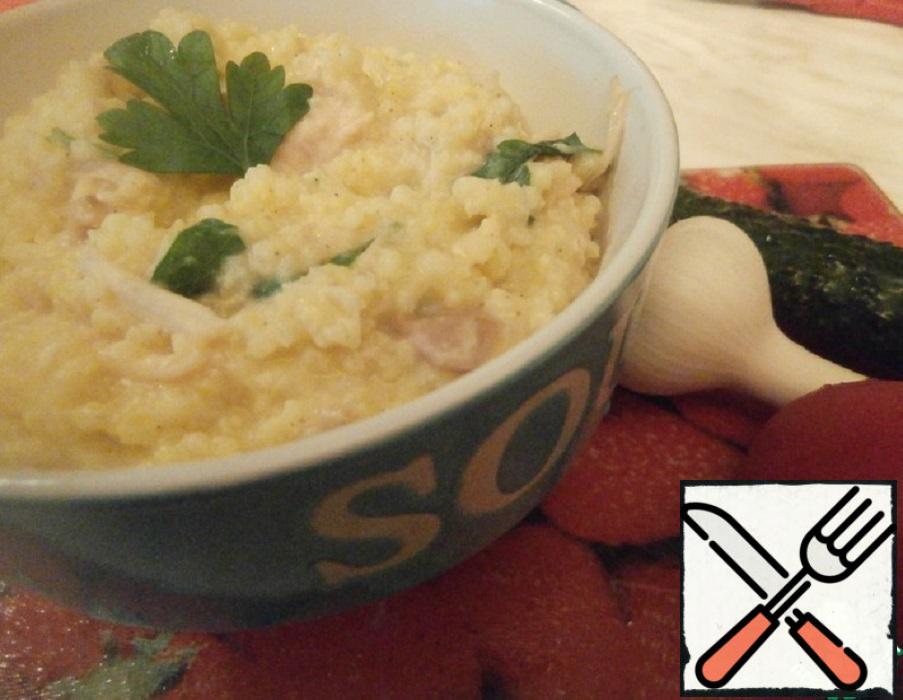
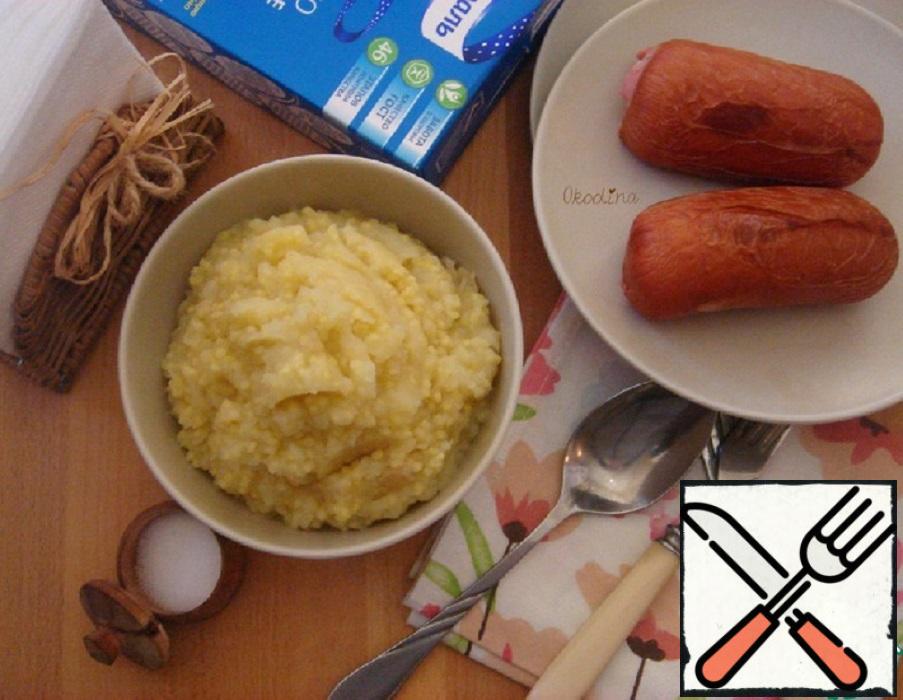
Millet plus potatoes is a dish that is called differently in different localities. Grandma called this dish “Kulesh”. It is very easy and fast to feed them with this dish, which is expensive at the dacha. We will need a minimum of food and very little time – while the flakes are cooking.
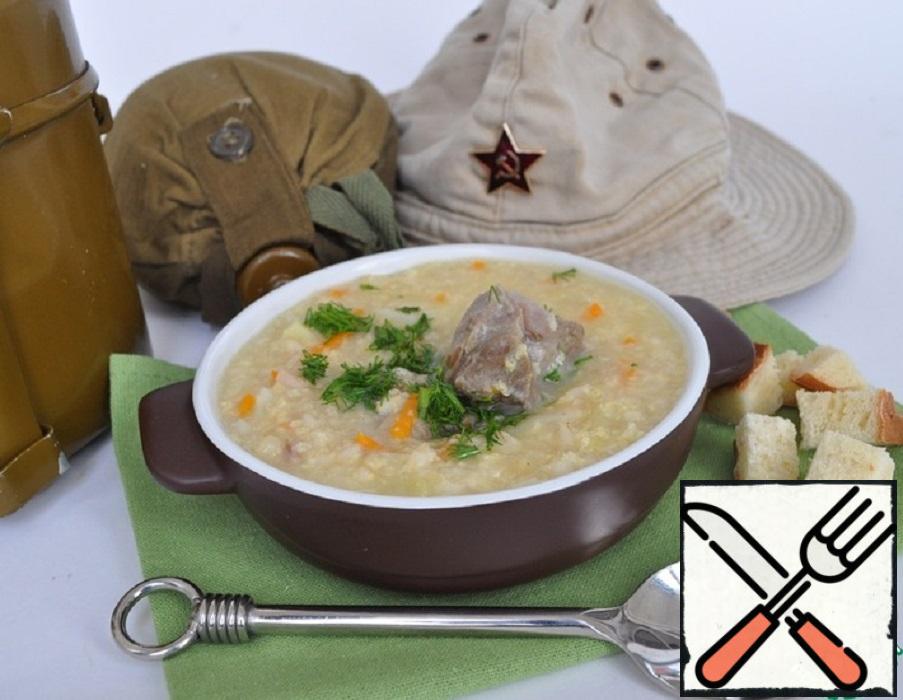
The war, the front, I’m… cooking? The items seem to be difficult to match. Everyone has their own: one in the trench – breadcrumbs soaked in a stream, the other in the office – a delicacy specially brought from the capital by plane… When guns speak, the muses, apparently, must remain silent. Including Colin, the patron saint of chefs. But, as the Russian people say, as you fall, you will drown. In other words, war is war, and lunch is on schedule. And today, when interest in the culinary side of our life has increased dramatically, there is almost no one to tell that a Russian soldier, like two hundred years ago, could cook porridge even with an axe, and his gastronomic savvy was matched by the ability to beat the enemy. This is one of the most widely used recipes during the war. Kulesh is a thick soup or not very thick, but very satisfying porridge.
Kulesh (Kulish) is a dish of Zaporozhye Cossacks. A real Cossack kulesh — spring water, Sumy millet and wild garlic, and all that. Nowadays, the recipe for kulesh has changed, it is porridge with the addition of other ingredients. Any cereal is good in kulesh, but it is better if it is boiled. I decided to try to cook a low-fat mushroom kulesh with rice and vegetables, but nutritious, delicious and very fragrant.
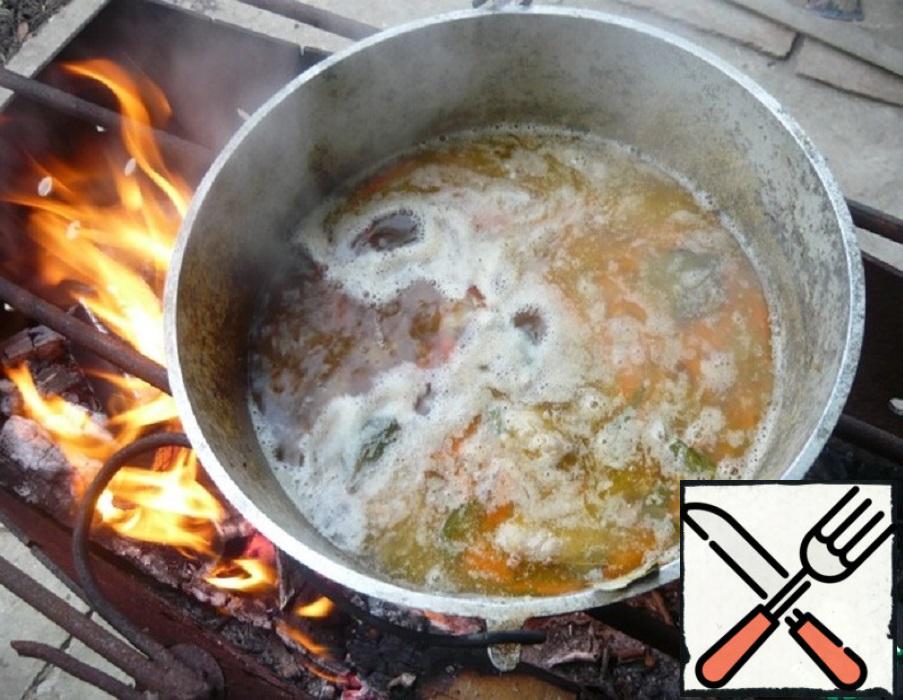
You need to take a walk with the children, manage in the garden, and even a hungry husband will come for lunch… So, today we are cooking outdoors. Yes, yes, don’t be surprised. Who knows, but in our Kuban winter is now such that the buds on the trees are blooming! Therefore, I bring to your attention a common dish – kulesh. The products are simple, we cook according to all the rules – in a pot and on fire!
My grandmother always said that kulesh should be cooked “with a soul and slowly.” And today I realized the secret of this delicious dish. I’ve always cooked according to this recipe, but today it turned out especially delicious. I did everything slowly and in the very warm company of our friends. My husband gave me this name. After the first spoonful he said: “This is a real kulesh!”
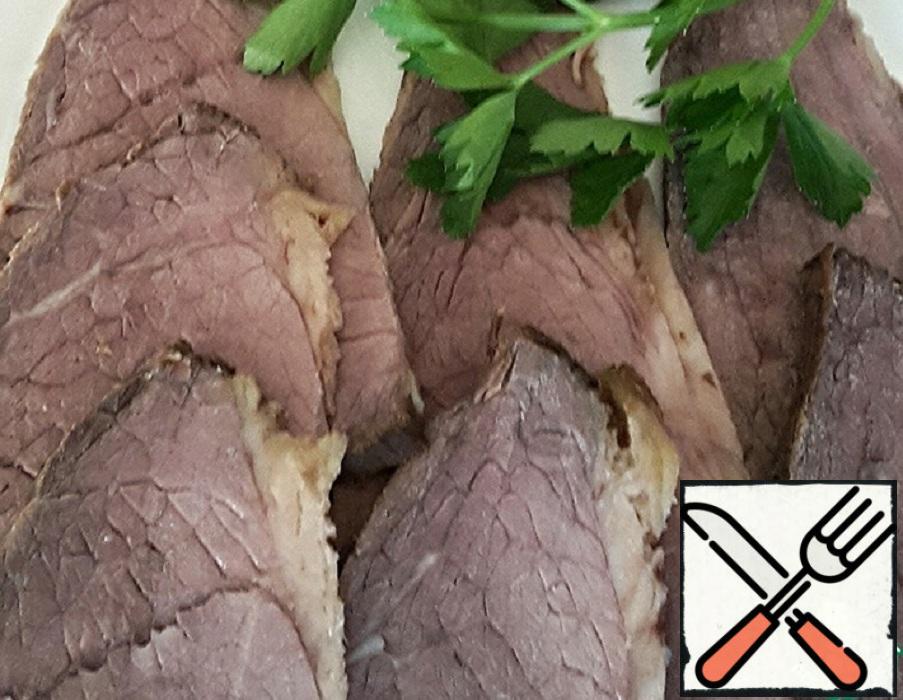
Here, I accidentally found another version of pastrami, I hurry to share it with you faster. Excellent cold appetizer, perfectly combined with sandwiches, lettuce leaves, fresh green onions, cucumber, mmm…
Dear chefs, this pastrami is something amazing. Since I generally like recipes from the “put-forget-Nirvana” series, I love this pastrami doubly, because I have to forget about it twice. Moreover, the whole process, from pickling to heat treatment, was invented by me personally, the recipe is, so to speak, author’s (wow, how loud it sounds).