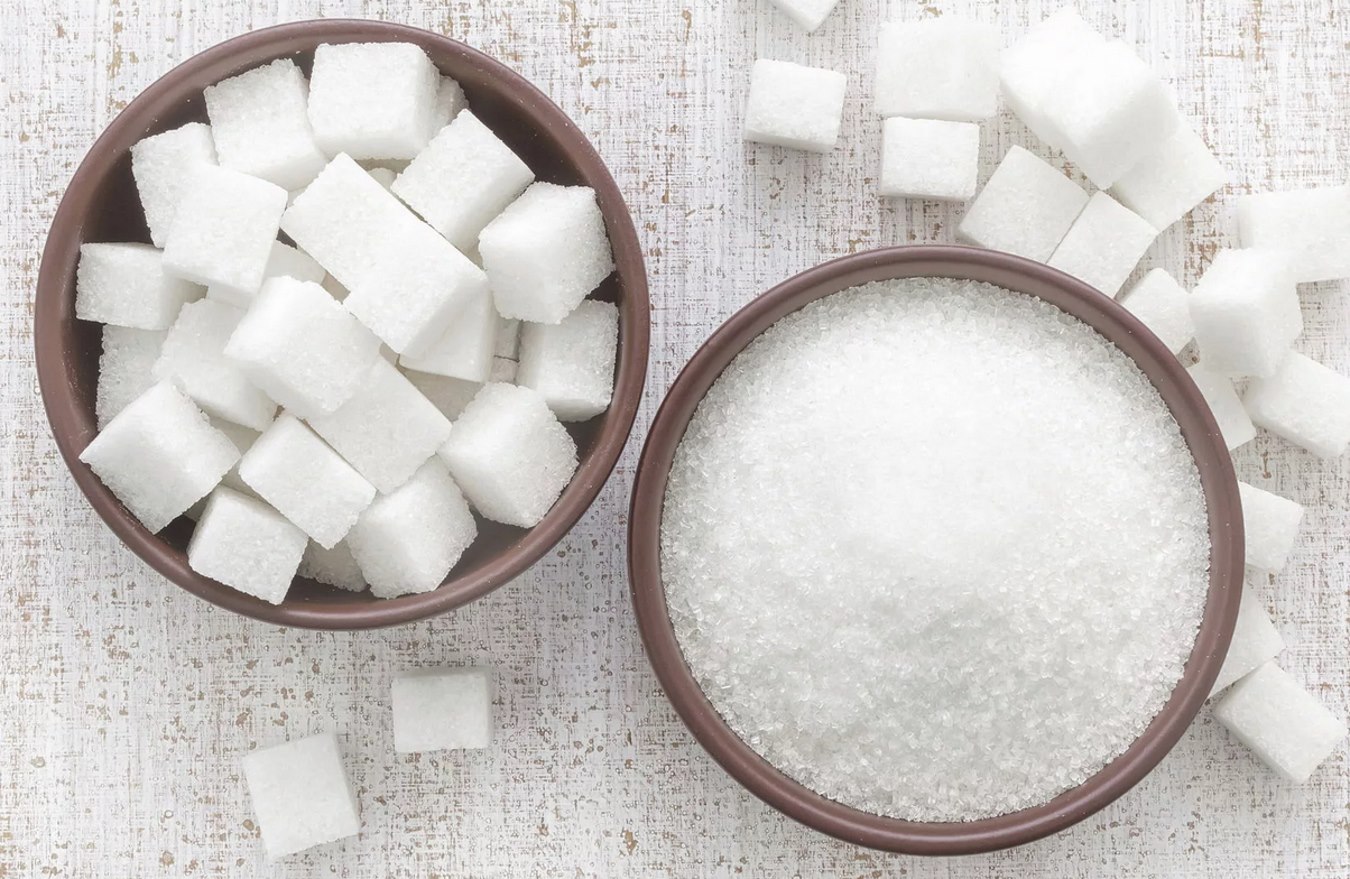
In culinary and household terms, sugar is called sucrose – an ordinary food sweetener that is obtained by processing sugar cane or sugar beet.
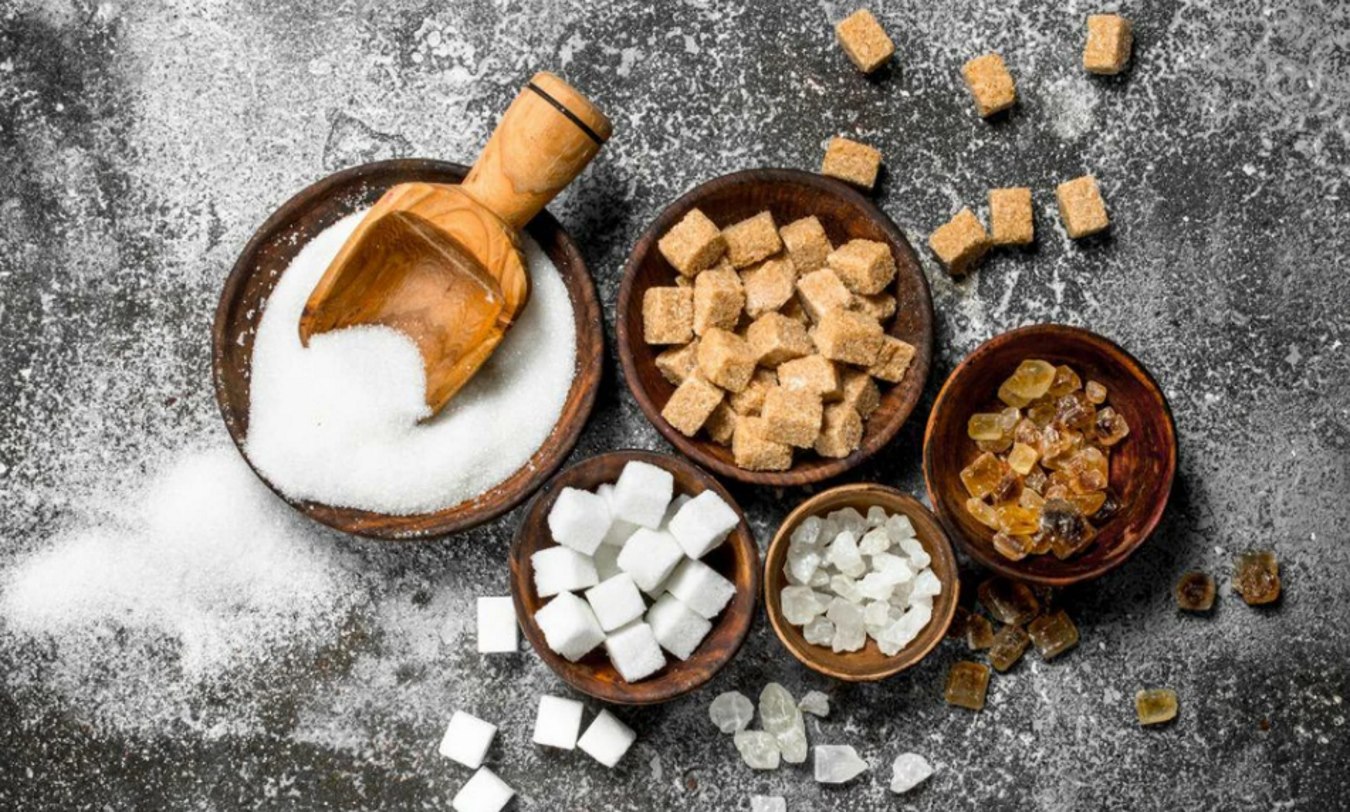
The white color of sugar is achieved during refining, but at the same time its individual crystals remain colorless. Many varieties of sugar contain different amounts of vegetable juice – molasses, which gives the crystals different shades of white color.
Sugar is an indispensable ingredient in many drinks, dishes, confectionery and bakery products. It is a familiar additive to coffee, cocoa and tea; confectionery creams, ice cream, icing and sweets cannot do without it. As a good preservative, white sugar is used in cooking jam, making jelly and other products from fruits and berries. Today, white sugar can be found almost everywhere, even where it is not expected to be found. For example, it may end up in low-fat diet yogurt or sausages, as well as in the manufacture of canned meat.
White sugar on sale is in the form of granulated sugar and refined sugar in pieces. Granulated sugar is packed in bags of different capacity, usually from one to fifty kilograms. Dense polyethylene bags are used, inside of which a film is additionally stretched to protect the contents from moisture and the spillage of crystals. Refined products are packed in cardboard boxes. The high hygroscopicity of white sugar causes certain requirements for its storage. The room where the product is located must be dry, protected from temperature fluctuations. Storing it at high humidity will lead to the formation of lumps. Sugar has the ability to absorb foreign odors, so you should not keep it near products with strong flavors.
White sugar is very high in calories – almost 400 kcal per one hundred grams of the product, and its composition consists entirely of carbohydrates. Therefore, when dieting, it is recommended to limit the use of this product in its pure form (for sweetening coffee or tea) and in the form of various sugar-containing drinks, cakes, cookies, etc.
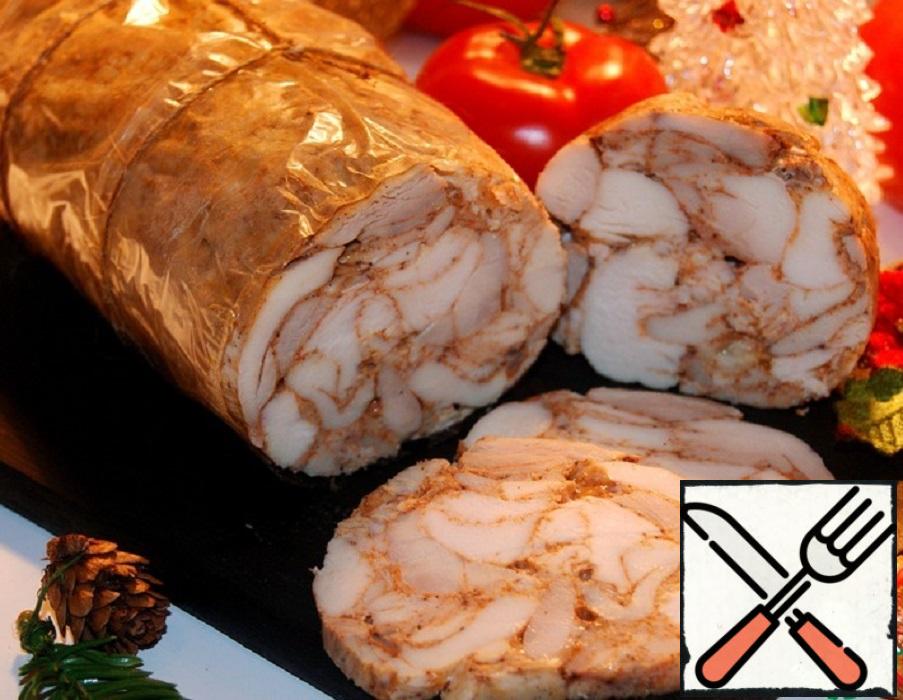
Chicken ham at home – will decorate your New Year’s table, surprise with its taste and aroma. And you won’t need a ham bowl or juice bags – just your hands and diligence! I will try to explain to you what I have learned myself – how to prepare a “portion” for ham, and also share how to prepare a set of spices on my own. In this recipe, I do not pretend to the identity of the taste and color of store-bought ham, so it is called homemade.
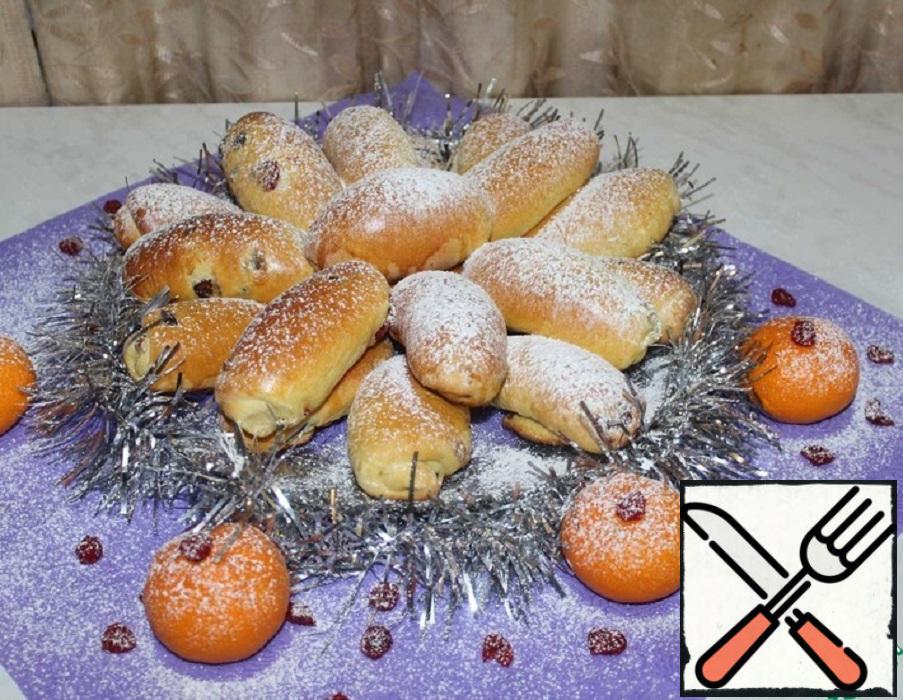
It’s tangerine season, why not bake tangerine buns? Fragrant and delicious buns with cherries and cranberries. The buns are soft and tender. Bon appetit to everyone.
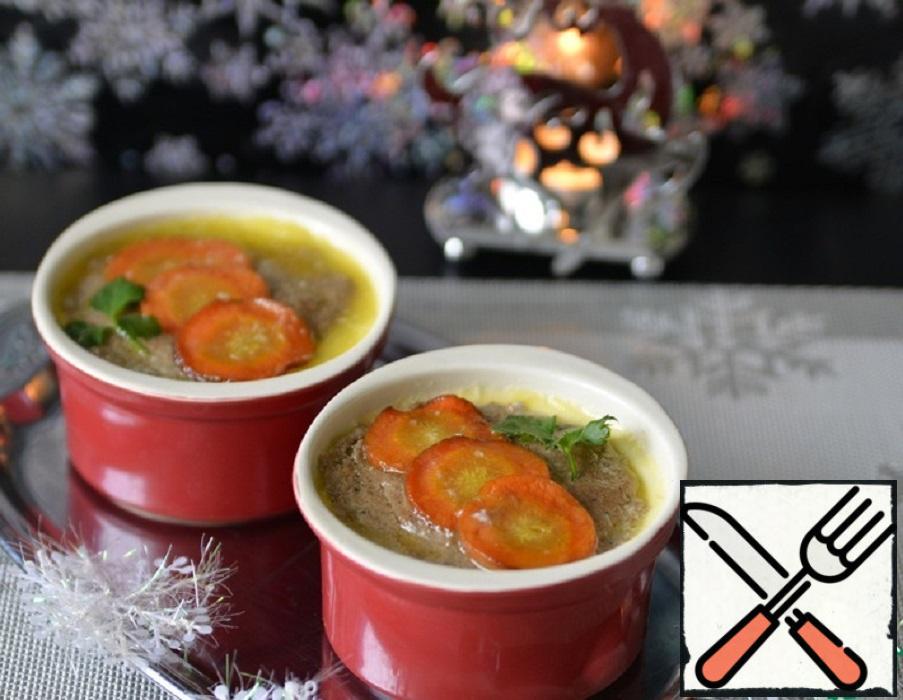
I always have pate on the festive table. Recently I saw a recipe that I immediately prepared with some changes and shared with you. Tender chicken liver with a light sweetness of carrots and sesame flavor.
These cupcakes will be a nice addition to the festive dessert table. Their aroma and taste are suitable for making coffee and tea. And leave a pleasant aftertaste for a long time.
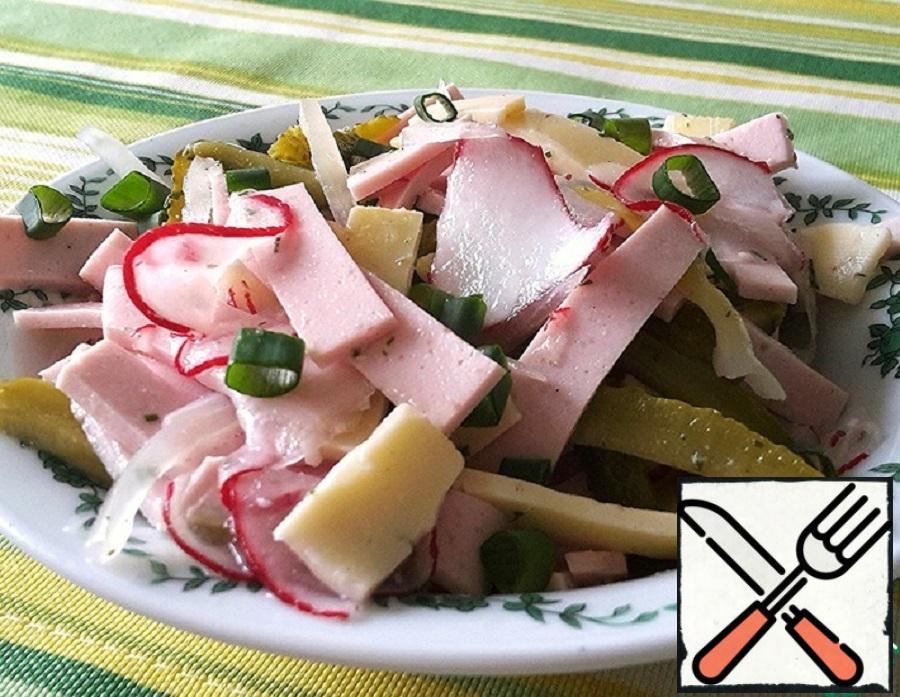
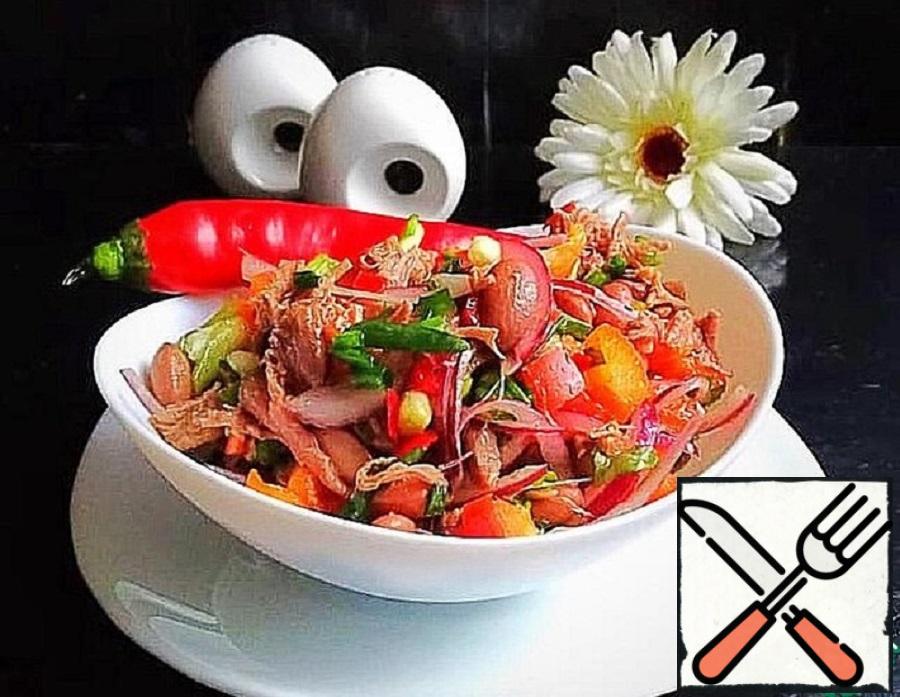
A hearty and savory salad of simple products, which is very popular with men and not only. Ideal for dinner, picnic and a hearty snack. This salad is especially good with cold beer and a slice of crispy freshly baked rustic bread.
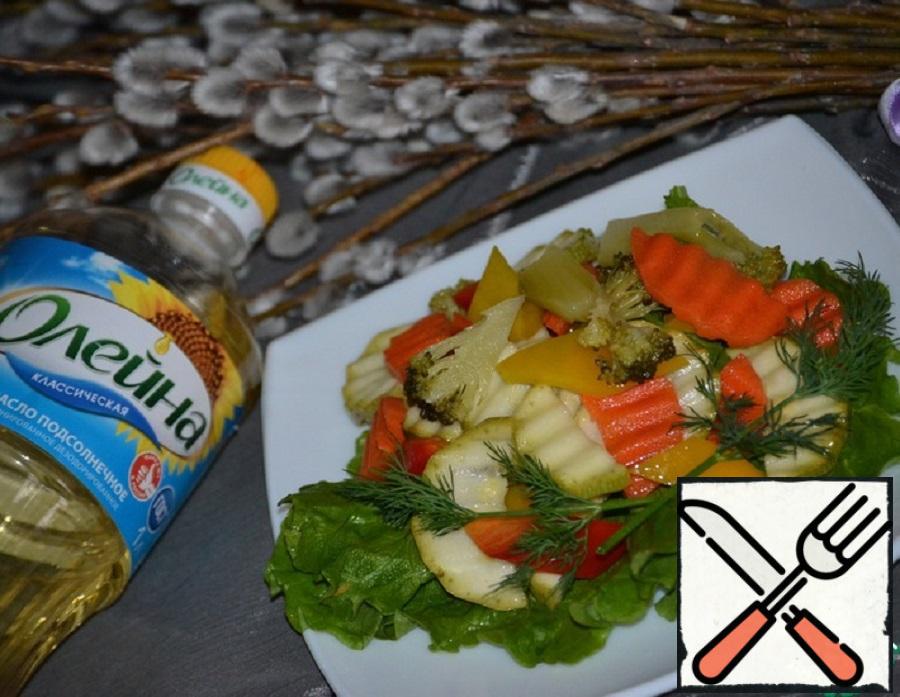
I present to you a very tasty, bright and vitamin salad! Vegetable oil-based dressing gives flavor and piquancy, and roasted chickpeas gives the dish an interesting crispy note and richness. Despite the fact that this salad is lean, it is also suitable for your festive table!
The smell of fresh bread is unforgettable. Even when a person is full, at the sight of hot, fragrant, fresh bread, there is a desire to break off a piece and enjoy the taste. Delicious, beautiful, personifying the sun tortilla plays a special role in Uzbek cuisine. Of course, I don’t know how to cook it in a tandoor, but I finally got this wonderful tool for decorating bread and decided to try it. What a delicious Uzbek bread it is!