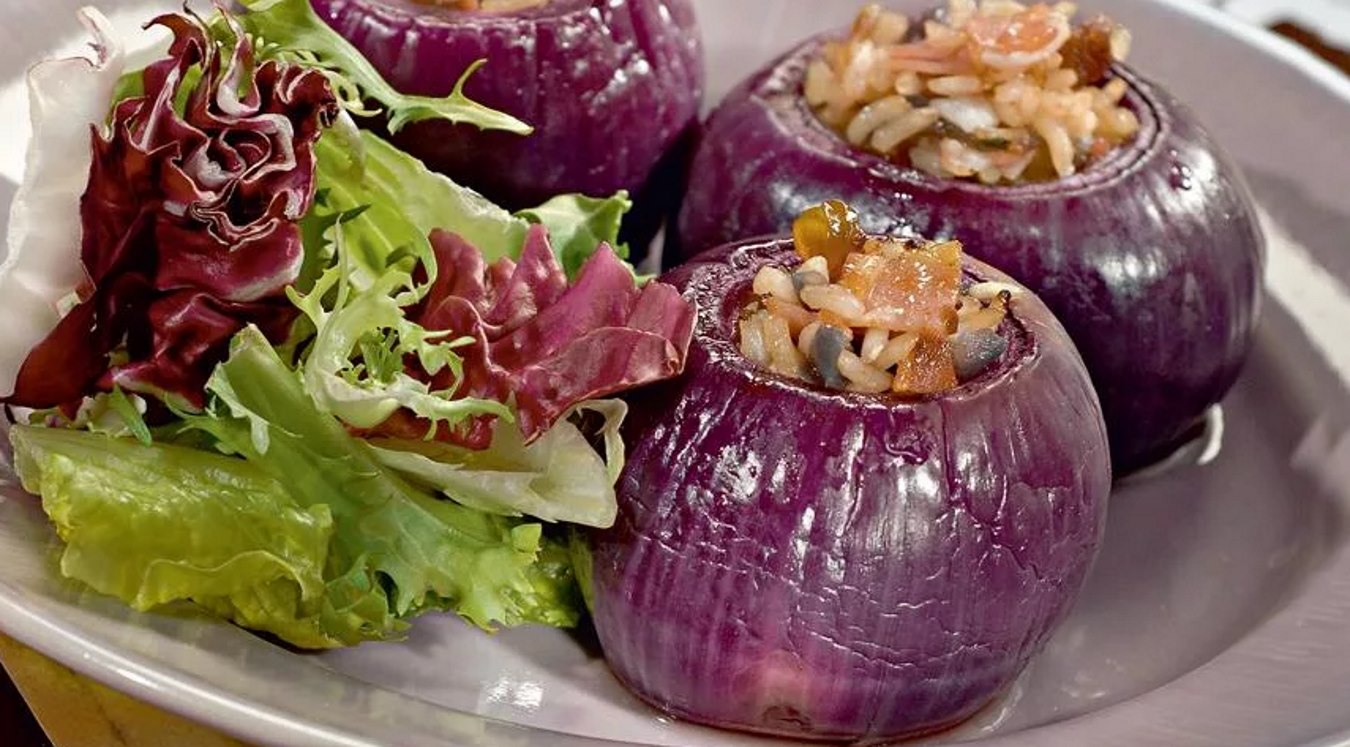
Onions in cooking are used in raw, boiled, fried, pickled and salted types. Although to preserve all the useful properties, minimal thermal exposure is recommended. Onions can be both a flavor seasoning for the main dish (and it is combined with meat, fish, rice, potatoes, flour products, cottage cheese, and other vegetables), and the basis of the recipe. Many national cuisines have their own “branded” culinary products, in which onions can be called a key ingredient: French onion soup, British onion pie, etc. There are some culinary tricks that will allow you to cook this product (or a dish based on it) as tasty as possible: If you add a little granulated sugar to the oil during frying, the onions will brown better. So that the chopped onion does not burn during sauteing, before sending it to the frying pan, you should roll the “straw” in flour. Then it will simply acquire a reddish hue. Onions can be added to minced meat not only to improve the taste, but also to extend the shelf life of the meat part. To get rid of onion bitterness in the manufacture of salads, raw onions are slightly scalded with boiling water, and hands and knife are smeared with wet salt.
When choosing onions, preference should be given to dense clean heads, without damage, holes and stains. The sweetness-bitterness of a vegetable depends not only on the variety, but also on the length of daylight in the place of cultivation (southern onions are considered sweeter), the mineral content of the soil, the softness of the climate, the abundance of precipitation, etc. For example, with a large amount of annual precipitation, sulfur is actively washed out of the soil, which creates prerequisites for growing a sweeter vegetable. However, in general, it is believed that white varieties have a stronger flavor and are better suited for filling pies, red and purple ones have a sweet taste and are well combined in salads and marinades, and the Spanish variety is softer and sweeter, as well as onions with yellow–brown husks are better suited for frying.
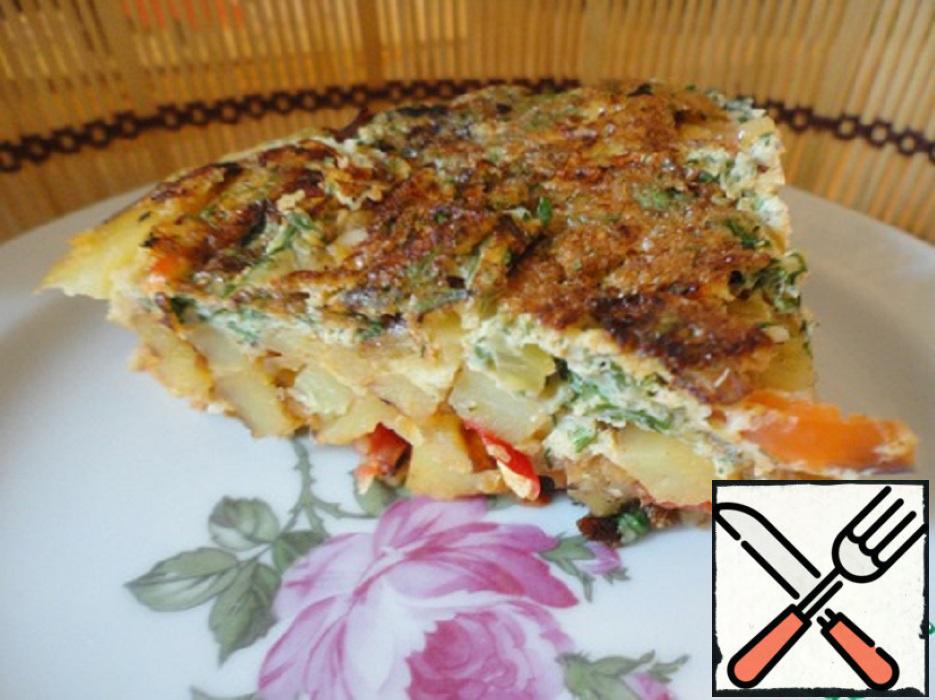
I came across several recipes for this Spanish casserole on the Internet. All the options were different, but I combined together the ideas I particularly liked. It turned out extremely tasty. I will not say that all the nuances of Spanish cuisine are observed, because I am not a good connoisseur of it, so do not judge strictly and help yourself. This is a wonderful weekend breakfast!
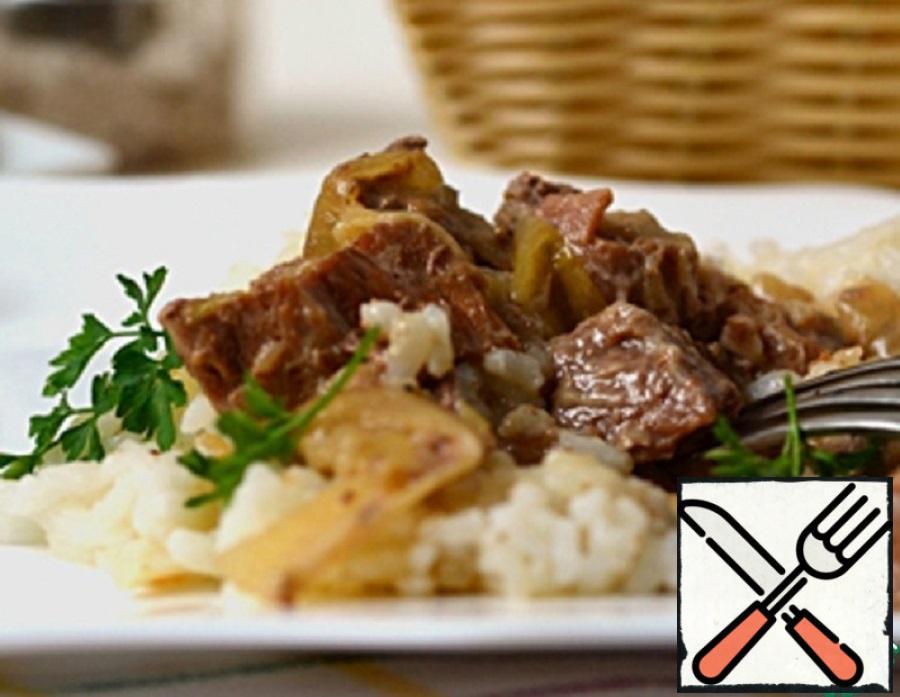
Tender beef in delicious onion sauce! Cooking this dish will take some time, but your personal participation is minimal! It is very convenient and very tasty!
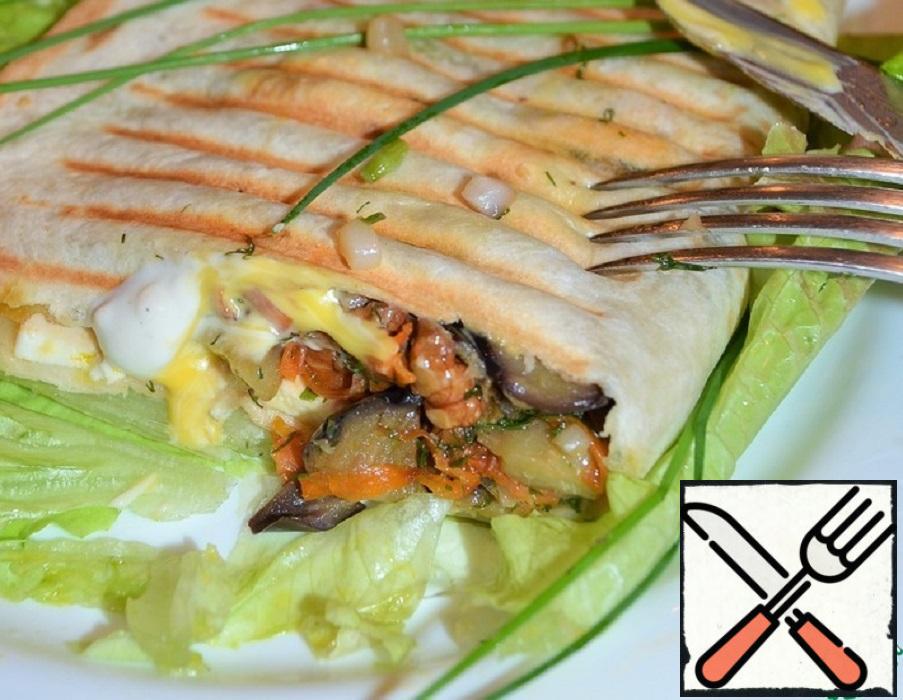
Such dishes are increasingly included in our menu, very convenient for a snack. I’m cooking this in the blink of an eye. Serve hot for lunch. I advise you to cook. Familiar products will play in a new light, no longer interesting.
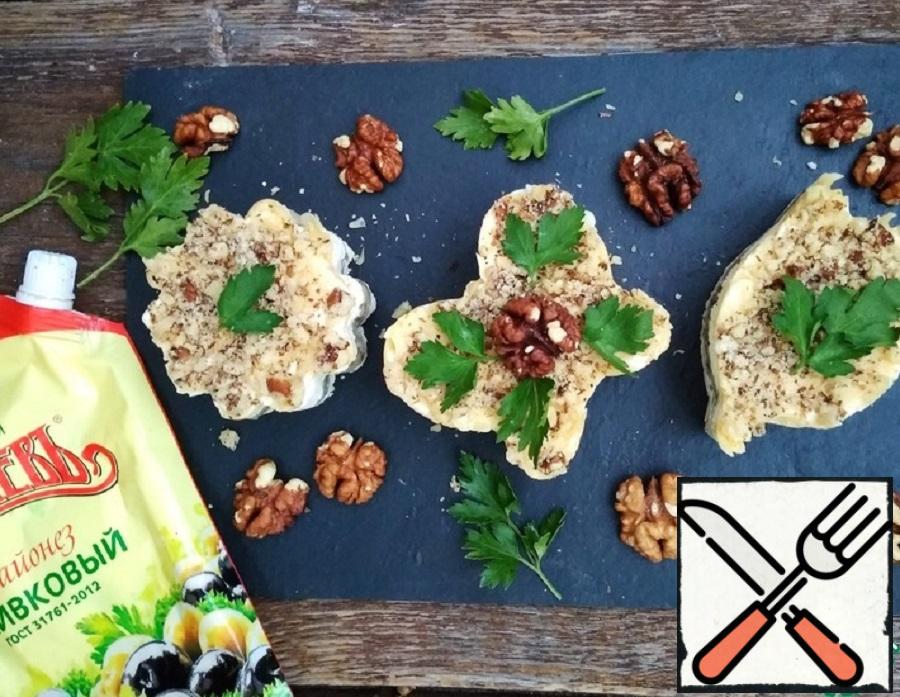
It is with great pleasure that I share a recipe that I like incredibly. It lives up to its name. The salad is made from the most common ingredients, but the original design and great taste of the salad will certainly support the festive mood.
I spent the whole evening preparing a salad for the festive table, in honor of my husband’s birthday. And the salad had a dream at night!!! The dish turns out to be original, delicious, without mayonnaise, low-calorie and vitamin.
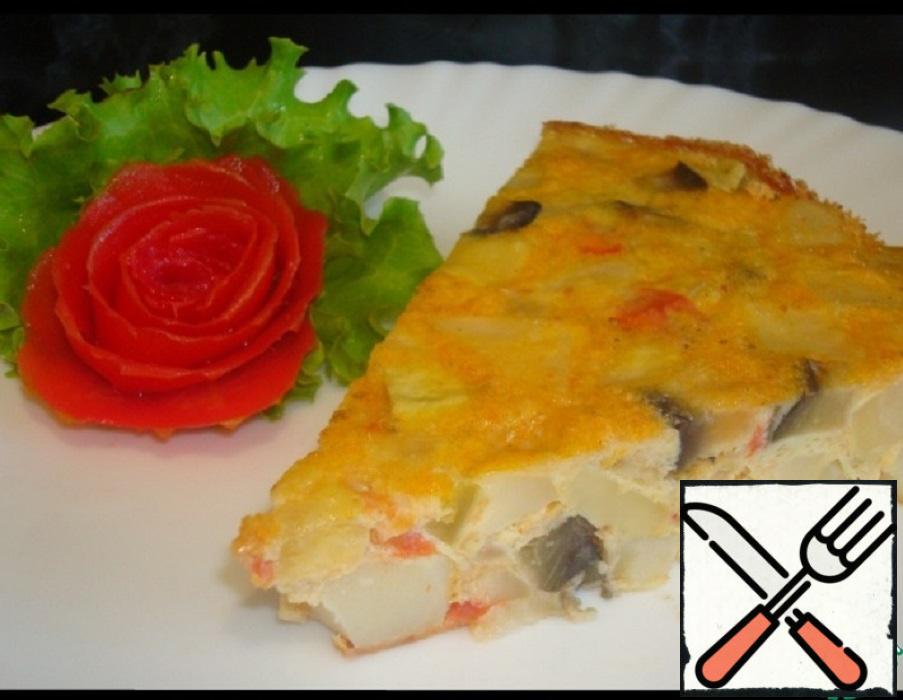
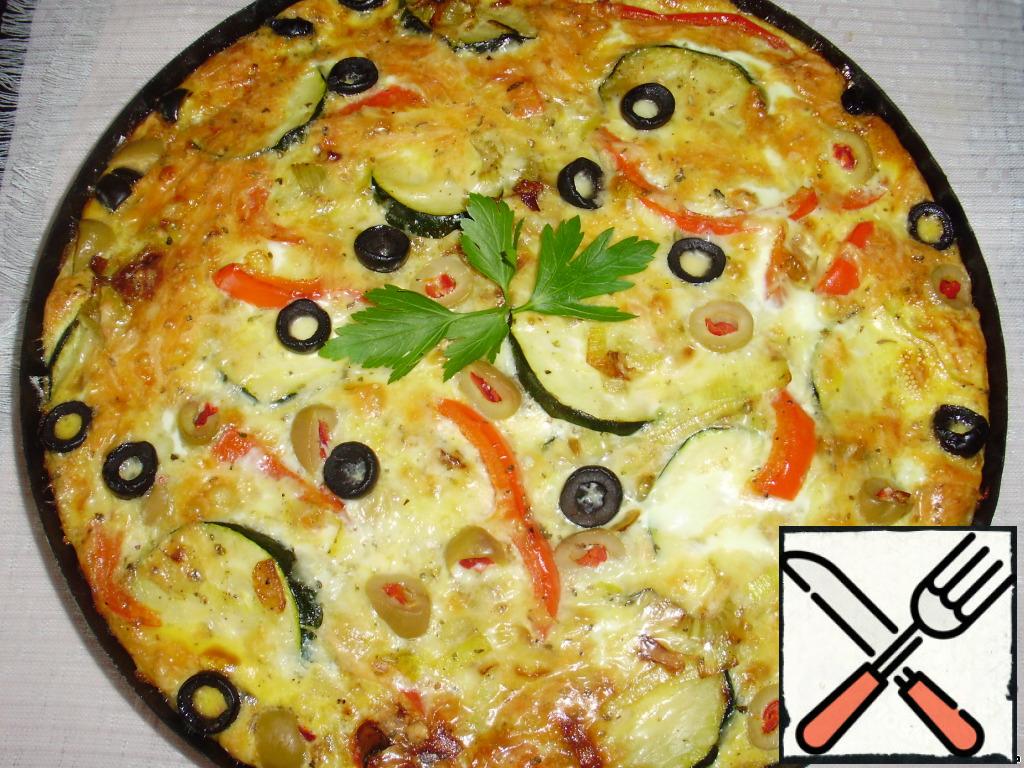
Another great recipe for Mediterranean cuisine. This tortilla is very similar to a vegetable pie. A light dish for a hot summer. A delicious recipe for lovers of vegetables, olives and cheese.
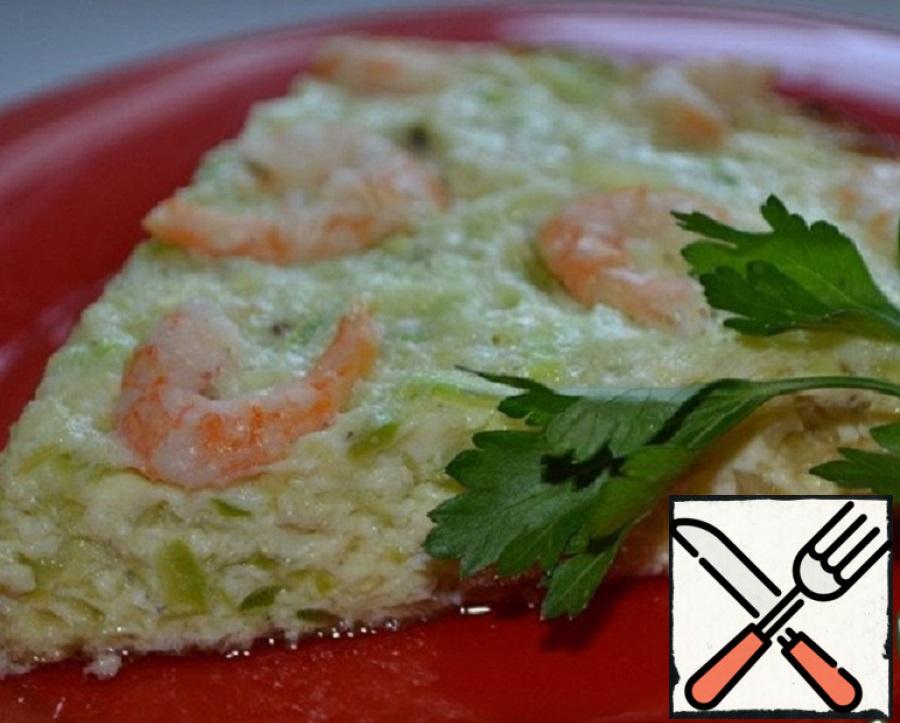
The zucchini season is in full swing. I offer you a very light and delicious dish – a zucchini tortilla (I eat it for breakfast, lunch and dinner). In most Spanish-speaking countries, a tortilla is any omelet with vegetables, served hot or cold, sometimes as a snack.
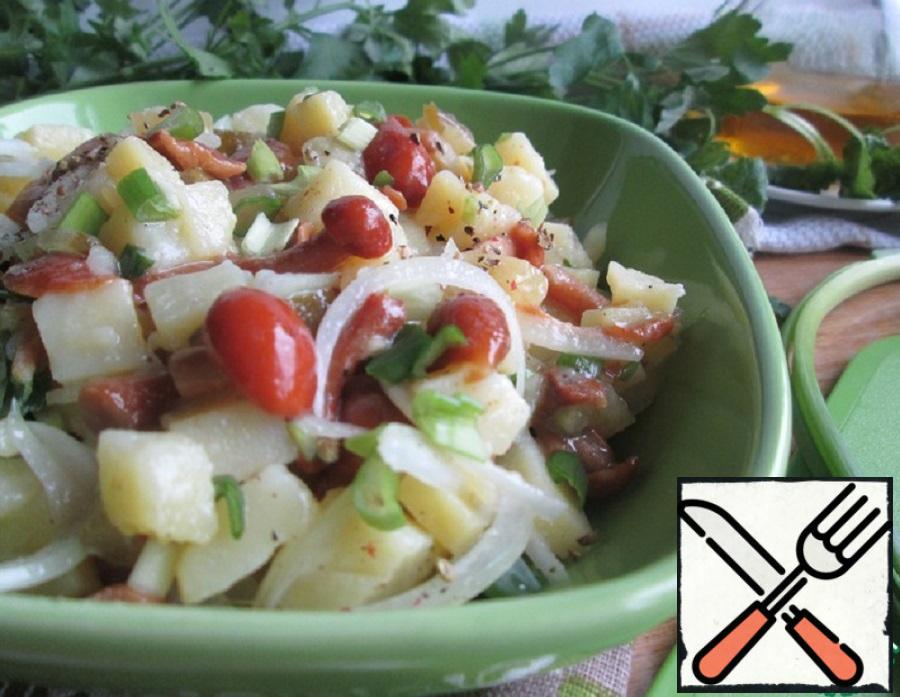
In this video blog, one chef suggests cooking a light vegetable salad of pickled honey mushrooms with potatoes. Let’s follow her advice and try the salad! Maybe we will discover a new taste!